


The $50B Milestone: Can Prediction Markets Maintain Momentum Post-World Cup?
Prediction markets have officially crossed a historic threshold, bursting past $50 billion in monthly trading volume for the first time in June. According to data from Artemis, this represents a staggering 75% month-over-month surge from May.
However, this milestone comes with a massive asterisk. The volume explosion directly coincided with the kick-off of the FIFA World Cup, turning June into a high-stakes litmus test: Is this a permanent shift in market structure, or simply a temporary, event-driven anomaly?
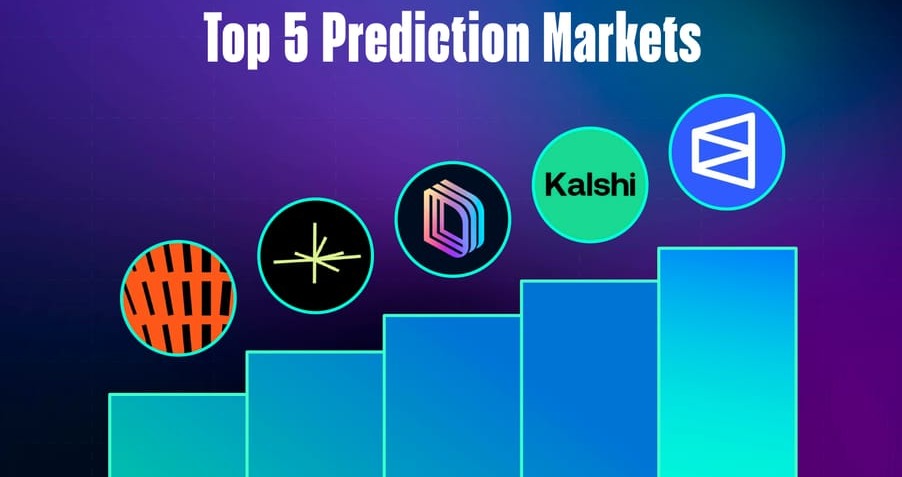
The Capital Breakdown: Who Won the June Surge?
The liquidity influx was distributed across a few dominant platforms, cementing a highly competitive hierarchy in the forecasting space:
- Kalshi: Maintained its market dominance, capturing roughly $33 billion in monthly volume.
- Polymarket: Processed a combined $14 billion across its legacy international platform and its newly minted, US-regulated exchange.
- Rothera: The Robinhood-backed challenger carved out a respectable $2 billion slice of the pie.
The World Cup Factor: Catalyst or Crutch?
There is no denying that football drove the finance. The World Cup, which commenced on June 11, has solidified its status as the industry’s largest liquidity event in history.
To put the scale into perspective:
- Kalshi processed $7.4 billion in tournament-related trades alone, eclipsing its entire volume for March Madness.
- Polymarket saw $6.4 billion in World Cup handles—a astronomical leap from the mere $138,000 it processed during the entire 2022 tournament.
While June proved that modern prediction market infrastructure can seamlessly handle institutional-grade volume and sustained trading traffic, skeptics argue that a quadrennial global tournament is an exceptional catalyst that artificially concentrates liquidity.
Beyond the Pitch: A New Class of Retail Traders
Despite fears of a post-tournament hangover, underlying user demographics suggest deeper structural growth. A recent study by Bitget Wallet analyzing 857,000 active Polymarket users revealed a fascinating trend: 60% of participants had no prior on-chain trading history.
This indicates that prediction markets are successfully breaking out of the crypto-native echo chamber and capturing a mainstream retail audience. Because these users are engaging with the platform for speculative entertainment and information discovery rather than pure Web3 trading, their activity may not abruptly vanish when the final whistle blows.
Industry Deep Dives:
- Owning the Exchange Is Becoming the New Competitive Advantage in Prediction Markets
- Prediction Markets Are Attracting Users Who Never Become Traders
- Inside Prediction Markets: Lawsuits Mount as New Products and Partnerships Keep Coming
The Fintech Takeaway: What Brokers Need to Watch
June served as a successful proof-of-concept and stress test for the entire sector. The infrastructure held up, and the capital followed.
For retail brokerages and fintech operators, the metric to watch right now isn't June’s peak, but rather August's floor. If trading volumes find a stabilized, elevated baseline after the World Cup dust settles, prediction markets will have officially transitioned from a niche alternative asset class into a mainstream financial staple.